A Pre-Launch Testing Checklist Before You Go Live
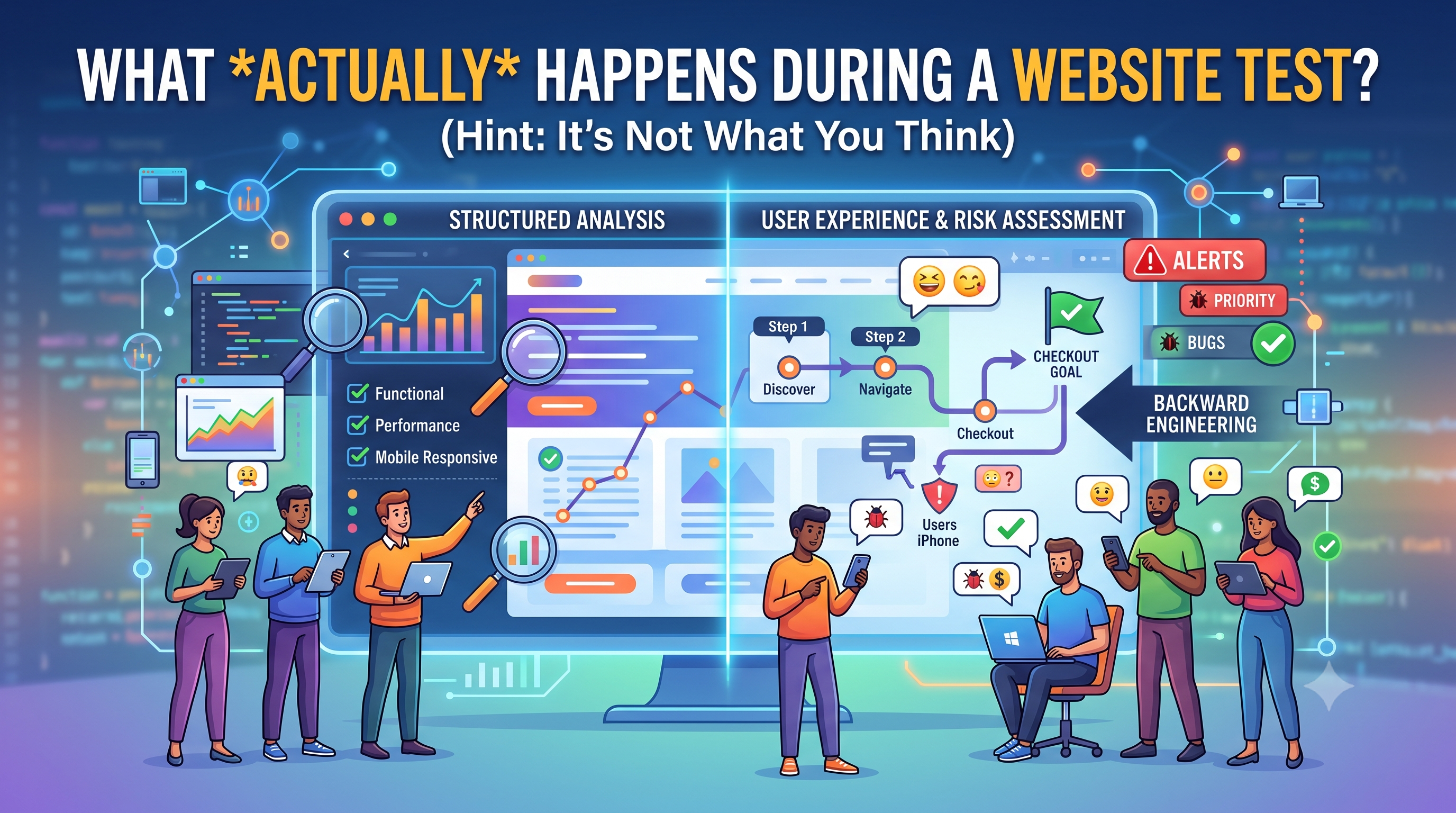
A common assumption about website testing is that it has to be a slow, technical process, engineers auditing every line of code for weeks before anything can go live. That assumption keeps a lot of builders from testing at all.
An untested launch carries real risk: a broken contact form silently dropping real leads, or a layout issue costing a large share of mobile visitors in the first few seconds, without anyone noticing until well after launch.
Effective testing is not a multi-week audit. It is a series of short, targeted passes that catch the majority of real problems quickly, early enough to fix before launch rather than after.
Testing is a series of quick passes, not a long audit
A single exhaustive audit spanning days or weeks is often the least efficient approach, since one small update afterward can break a component and force the whole audit to be repeated. Short, targeted passes done early catch the majority of obvious issues quickly, which leaves the larger, more exhaustive review for later, once the foundation is already proven to work.
Test across real devices, not ideal conditions
A useful starting point is a small spread across the most common real-world combinations: a few testers on iOS, a few on Android, a few on Windows, and a few on Mac. Within each pass, the questions are simple and concrete: Do headers display correctly? Are buttons actually clickable? Does a link lead where it promises, or to a broken page? Does the site load at a reasonable speed? Is a mobile visitor forced through a layout built for desktop first?
Testing is not about confirming the code compiles. It is about confirming a real person, on a real device, can actually get through it.
The person testing should not be the person who built it
Anyone who already knows how a product is supposed to work carries that context into every test, and instinctively works around awkward navigation or unclear steps without noticing. A tester with no prior context does not have that advantage, and surfaces the real points of confusion a builder would never catch alone, such as not recognizing an unfamiliar setup step or not knowing where to find a price.
Specific tasks produce usable feedback
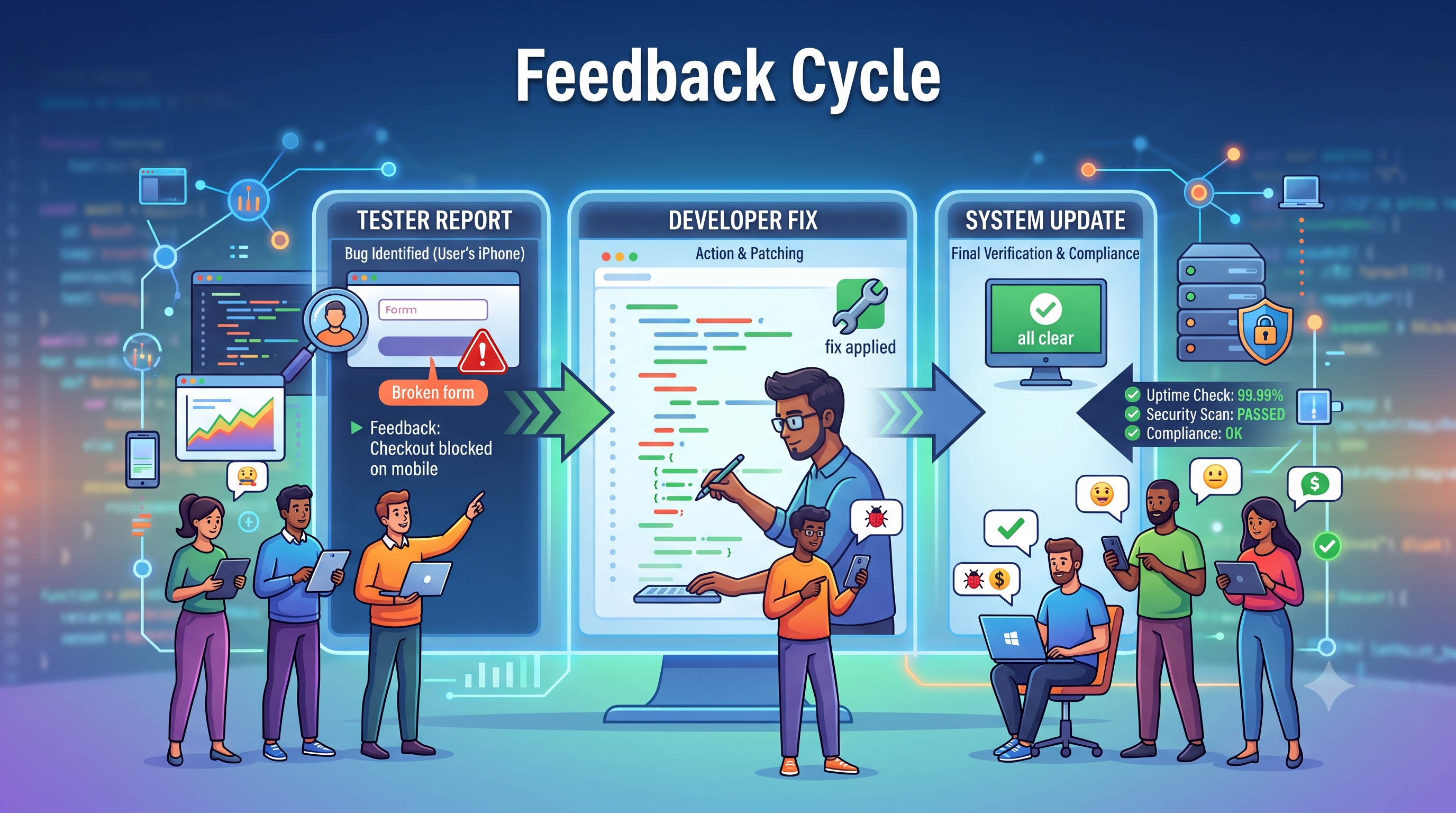
A comment like "the form felt weird" does not tell anyone what to fix. A specific task paired with a specific report does: asking a tester to submit an inquiry through the contact form on mobile, and having them report exactly what happened, turns a vague impression into a concrete, fixable issue.
Not every issue needs fixing before launch
Once a testing pass wraps up, the resulting list of issues is rarely all equally urgent. A useful way to sort it: start from the site's core goal, whether that is completing a purchase or capturing a lead, and trace backward. A bug that fully blocks that goal, such as a checkout button that does not work or a contact form that silently fails, is a launch blocker. A bug that only adds friction, while the goal is still reachable, can often wait for a later update.
A few things are never optional
Regardless of what else can wait, three things should be confirmed before anything goes live: that hosting is stable enough for real traffic, that personal information submitted through the site is properly encrypted and protected, and that the site meets whatever legal or regulatory requirements apply to its specific industry.
Structured human testing formalizes this entire process: specific tasks, a spread of real devices, and testers with no prior context who report back exactly what they found. Jellar connects builders with real testers who follow this same approach, before a launch depends on guesswork.
See what Jellar finds on your AI-built or vibe-coded product.
TRY JELLAR →